What Makes a Montessori Classroom Actually Different?
QUICK ANSWER
A Montessori classroom is organized around the child’s own pace and curiosity, not a teacher-directed schedule. At Minnesota Montessori in Shakopee, carefully prepared areas for learning invite children to choose their own work, move through it independently, and return to it as many times as they need. The result is a room that feels purposeful at every shelf and in every corner.
When Families Start Looking at Schools, the Classrooms Raise the Most Questions
Late summer and early fall bring a familiar rhythm for families in Shakopee: open houses, school tours, and a lot of questions about what a school day actually looks like. For families considering Montessori for the first time, stepping into a classroom can feel surprising. Children are moving around. Some are working on the floor. A six-year-old is helping a four-year-old count beads. There is no whole-group lesson in progress.
What families are seeing is the prepared environment doing its work, and it is worth understanding what makes it different from a conventional classroom before you visit.
Every Detail in a Montessori Classroom Is Intentional
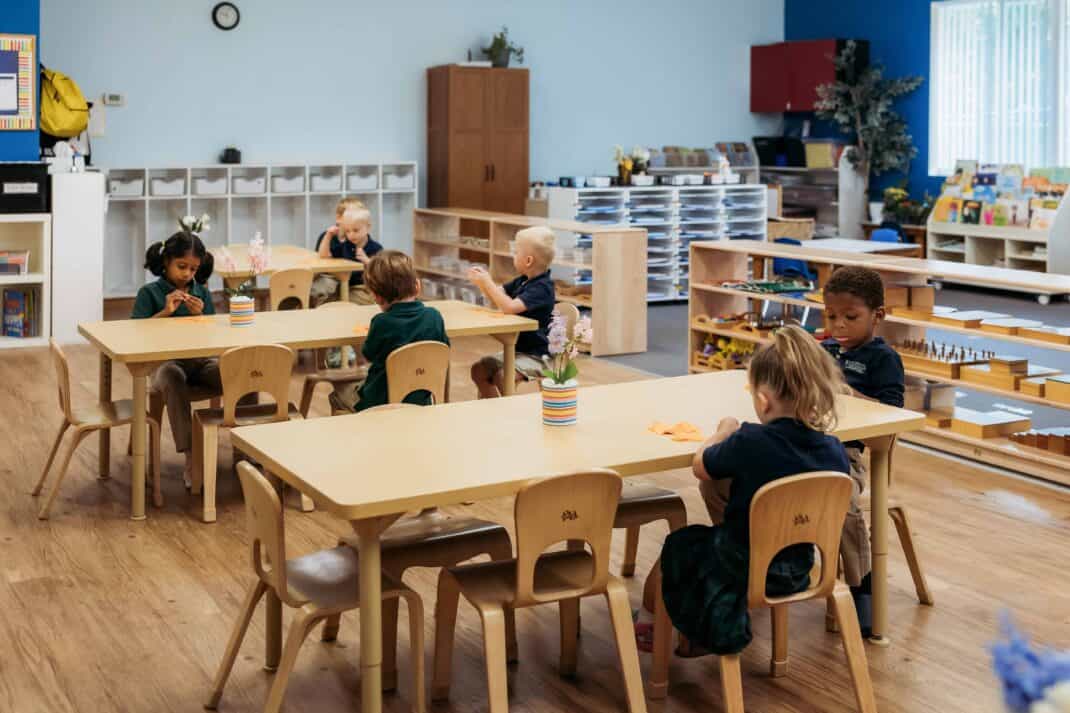
The term “prepared environment” refers to a classroom designed from the ground up so that children can access, use, and return materials independently. At Minnesota Montessori, the areas for learning are organized this way on purpose.
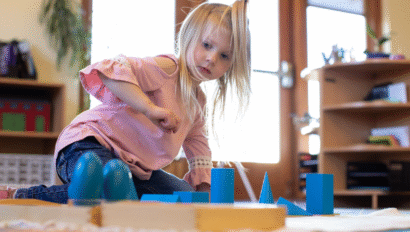
Materials sit at child height on open shelves. Each one has a designated place. The progression across a shelf moves from simpler to more complex, which means a child who is ready to try something more advanced can often see it from where they are working. A child who needs more time with a foundational skill can stay with it without anyone redirecting them.
This organization does more than keep the space tidy. It gives children a way to make real decisions about their own learning throughout the day. When a child knows where everything is and how it works, they can act on their own curiosity rather than waiting for permission.
The physical space itself teaches. That is one of the central ideas that makes a Montessori environment structurally different from a conventional classroom, where most learning flows through the adult at the front of the room.
The Guide’s Role Looks Different Because It Is Different
In a Montessori classroom, the educator is called a Guide, and the role is genuinely distinct from a traditional teaching role. A Guide introduces a child to a material through a focused, often one-on-one presentation. After that, the child works with the material independently. The Guide observes, takes notes, and decides when a child is ready for the next step.
This means a Guide spends much of the day watching carefully rather than talking to the whole group. NAEYC describes responsive teaching as a cornerstone of high-quality early childhood programs, noting that educators who observe and respond to each child’s cues support deeper engagement and skill development. Montessori’s model is built on exactly this kind of attentiveness.
At Minnesota Montessori, Guides are Montessori-trained and work with each child’s individual timeline. A child is not moved forward because the calendar says so. They move forward because their Guide has observed that they are ready.
The Work Cycle Gives Children Sustained Time to Go Deep
Most school-day schedules are organized around the clock. Children move from one subject to the next at a fixed time, regardless of where they are in their thinking.
A Montessori work cycle works differently. Children have an extended, uninterrupted block of time, typically around three hours in the morning, during which they choose their work, carry it to their mat or table, complete it, and return it to the shelf before choosing something new. There are no bells or transitions cutting into the middle of focused effort.
This matters developmentally because concentration builds over time within a single work session. A child who is allowed to stay with a challenging material until they work it through is practicing something more than the skill the material is designed to teach. They are building the capacity to stay with difficulty, try again, and finish what they started.
Parents of children who have been at Minnesota Montessori for multiple years often notice this quality carrying over at home. One family who has been members for more than six years pointed to the daily work in the Children’s Houses as the reason their children arrived at kindergarten feeling confident and prepared.
Mixed Ages Create a Community of Learners, Not Just Peers
A conventional classroom groups children by the year they were born. A Montessori classroom groups them by a three-year developmental span: typically ages three through six in the Children’s House, then six through nine, and so on.
This structure means that the youngest children in a group spend their first year watching what older children can do. They absorb norms, vocabulary, and techniques through observation before they are ever asked to demonstrate a skill themselves.
Older children, meanwhile, gain something distinct. Explaining a concept to a younger child requires a different kind of understanding than simply performing the task alone. Children who teach reinforce their own knowledge and develop patience and communication skills at the same time.
The mixed-age classroom also reduces competitive comparisons. Children are not all expected to be in the same place at the same time, which makes it easier to focus on their own progress rather than on how they measure up to the person next to them.
Frequently Asked Questions
Is a Montessori classroom structured or is it free play?
A Montessori classroom is structured, but the structure comes from the environment and the materials rather than from a teacher directing the whole group. Children choose their own work within a carefully prepared space where every material has a purpose and a place. The three-hour work cycle gives the day a consistent rhythm.
What does a Montessori Guide actually do all day?
A Guide’s primary work is observation. They introduce materials to individual children or small groups through focused presentations, then step back and watch how children engage. Over time, they use those observations to decide when a child is ready for a new material or a more complex challenge. Much of this work is quiet and intentional.
How does the mixed-age classroom benefit younger children specifically?
Younger children in a mixed-age group have two to three years to watch and absorb before they are the oldest in the room. They learn vocabulary, routines, and skills through observation, which means they often arrive at new challenges with more preparation than they would have had in a single-age classroom.
At what age can a child start at Minnesota Montessori?
Minnesota Montessori serves children from infancy through kindergarten, with programs for Infants (ages 0 to 1), Toddlers (ages 1 to 2), a Transition program (ages 26 months to 3 years), Preschool (ages 3 to 5), and Kindergarten (ages 5 to 6). Summer Camp and Enrichment Programs are also available for all ages.
Is Montessori a good fit for children who need extra time to warm up or who are easily distracted?
Montessori’s structure tends to support children who need time to settle in, because the work cycle is long and consistent, the environment is predictable, and children are not required to shift tasks on a fixed bell schedule. A Guide can work with a child’s pace rather than against it. If you have specific questions about your child’s needs, a tour and conversation with the team at Minnesota Montessori is a good place to start.
A Classroom Worth Seeing in Person
Reading about Montessori describes the ideas, but the classroom itself is what makes the philosophy legible. When you see children moving purposefully through a prepared space and a Guide working quietly alongside them, the structure behind it becomes much easier to understand.
Minnesota Montessori has been Shakopee’s longest-standing Montessori school since 2006. The team would be glad to walk you through what a typical morning looks like.
Schedule your Montessori tour at Minnesota Montessori in Shakopee at minnesotamontessori.com or call (952) 402-0303.
Related Posts
All Posts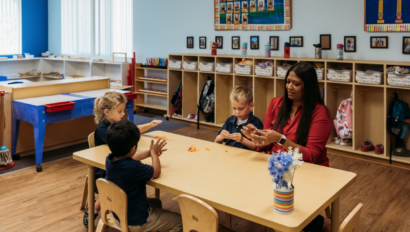
The Five Areas of Montessori Curriculum: What Your Child Is Building Every Day in Shakopee, MN
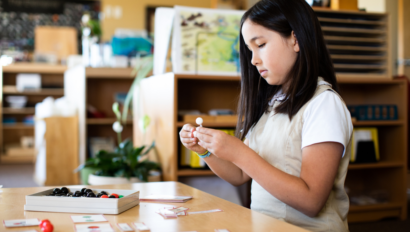
Inside Shakopee, MN’s Top Montessori Classrooms: What High-Quality Montessori Really Looks Like